For global buyers, a Coffee Cup Holder is more than a simple accessory. It supports safer handling, cleaner delivery, and a more consistent customer experience. A full tray may carry four hot cups, while a compact carrier may serve one takeaway order. Both must resist heat, moisture, movement, and sudden lifting.
Packaging analyst David Luttenberger has stated, “Good packaging protects the product, communicates value, and supports the user experience.” This principle applies directly to cup holders. A strong design keeps lids level when a courier turns sharply. It also gives customers a dry grip near a busy office entrance. Small details matter.
Material choice changes performance. Molded paper can offer rigidity and recyclable appeal. Corrugated board may provide better stacking strength during export. Recycled fiber sounds responsible, but weak construction can create waste through spills and replacements. That point deserves reflection.
Global buyers should examine load testing, cup-size compatibility, moisture resistance, printing quality, and production consistency. They should also request samples from different batches. A holder that works in a showroom may soften after ten minutes beside a hot latte. It may fail.
Regional transport conditions create further pressure. Humidity, long shipping routes, and uneven storage can affect fiber-based products. Reliable suppliers explain these risks clearly. They provide specifications, test records, and practical packing guidance. Price still matters, but the cheapest Coffee Cup Holder can become expensive after one damaged order. A careful purchasing decision balances protection, sustainability, branding, and real-world use.
What Is a Coffee Cup Holder and What Functions Does It Serve?
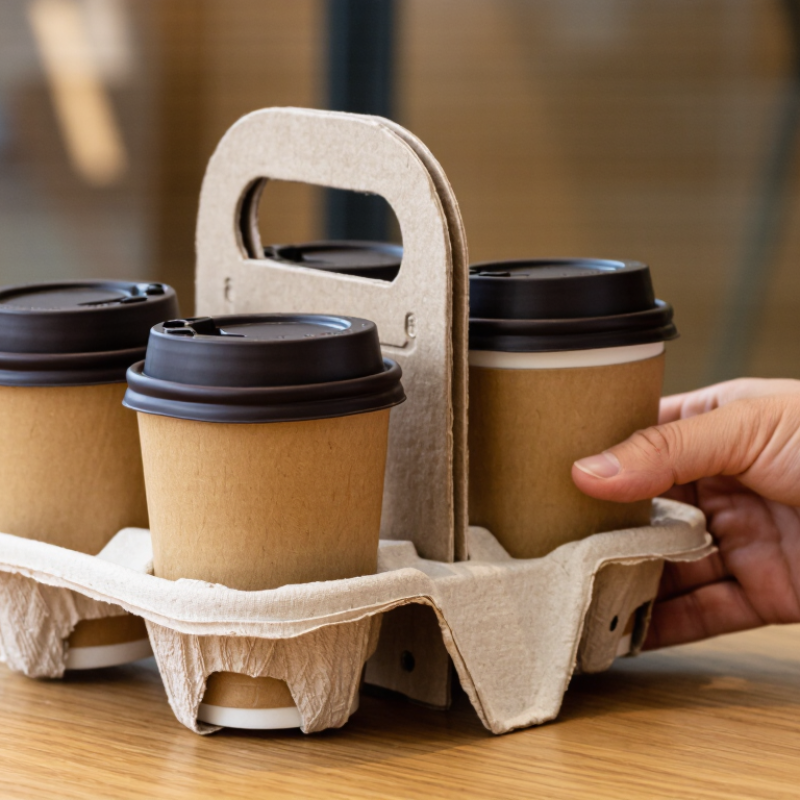
A coffee cup holder is a carrier that keeps one or more filled cups stable during transport. It usually uses molded fiber, corrugated board, paperboard, or reusable plastic. Its openings grip cup bodies, while the base distributes weight across the hand. For global buyers, this simple structure supports cafés, offices, delivery services, and event operators.
The National Coffee Association’s Spring 2024 National Coffee Data Trends report found that 67% of American adults drank coffee within the previous day. That habit creates constant demand for safe takeaway handling. A holder reduces tipping when customers carry several drinks, walk across uneven pavements, or place cups inside vehicles. Some designs separate hot cups from the hand and leave space for lids, stirrers, or small snacks. Small details matter.
It is not a perfect safety device. Poorly sized openings can loosen, crush cups, or transfer heat. The International Coffee Organization reported global coffee consumption of about 177 million 60-kilogram bags in 2023/24, showing the scale of the wider coffee supply chain. Buyers should therefore check load testing, moisture resistance, stacking performance, and material recovery options. Supplier samples should be tested with full cups, not empty ones. That practical step often reveals weak bases and unstable corners. Packaging specifications should also state dimensions, tolerances, storage conditions, and disposal guidance clearly.
How Does a Cup Holder Improve Safety During Coffee Transport?
For global coffee buyers, a cup holder is more than a display accessory. It stabilizes hot drinks when cartons move through warehouses, vans, and delivery routes. A properly fitted holder keeps cups upright during sudden braking, sharp turns, and uneven roads. That matters because spilled coffee can burn handlers, damage labels, and weaken corrugated packaging. Small movements create large problems. Good holders separate cups and reduce contact between lids, sleeves, and neighboring products.
From a sourcing perspective, safety begins with fit. The base should support the cup without squeezing it, while the rim should prevent sideward movement. Buyers should test filled cups, not empty samples. Temperature, condensation, and different lid shapes can change performance. In practical transport trials, I would place loaded holders on a vibrating platform, then inspect leaks, tilted lids, and wet surfaces. This simple check often reveals flaws that photographs hide. It is not perfect, but it is more reliable than judging appearance alone. Materials also need enough stiffness for stacking, yet reasonable weight for shipping efficiency.
A holder can protect people and products, but it cannot correct careless loading. Workers still need clear handling instructions and stable carton placement. I have seen well-designed packaging fail when holders were overfilled. That mistake deserves attention. Global buyers should request sample testing across cup sizes, transport distances, and climate conditions. Humid storage may soften fiber materials, while cold drinks can create unexpected moisture. Consistent dimensions, clean edges, and secure nesting support safer handling from production to final delivery.
Which Materials and Designs Suit Different Buyer Requirements?
For global buyers, material choice starts with use conditions, not appearance. A café needing fast takeaway service may prefer molded polypropylene. It is light, stackable, and generally easy to clean. A reusable office program may need silicone grips or a durable recycled-fiber shell. Silicone helps reduce sliding around warm cups. Recycled fiber offers a more natural touch, but moisture resistance must be tested carefully. Small detail.
Design should match handling habits. A two-cup carrier needs balanced openings and a firm center bridge. A single-cup holder may focus on insulation and one-handed carrying. Deep walls protect fingers from hot surfaces, while ventilation gaps can reduce trapped condensation. However, larger gaps may weaken the structure. Fold-flat designs save shipping space, yet assembly can frustrate busy staff. I have seen elegant prototypes fail because lids caught on narrow openings. Usability deserves a real cup test.
Buyers in humid regions should request soak, compression, and drop testing. Cold drinks also create moisture that exposes weak seams. For food-contact applications, suppliers should provide material specifications and relevant compliance documents for the target market. Recycled content sounds attractive, but consistency can vary between production batches. That needs verification. Color, logo area, and surface texture matter for retail presentation, but they should not compromise cleaning or grip. A practical sample review should include a hot cup, a cold cup, wet hands, and a crowded delivery bag. No design fits every buyer. That is the part worth reconsidering.
Why Do Global Buyers Consider Cost, Branding, and Sustainability?
A coffee cup holder is a small packaging component with a large procurement impact. It stabilizes two or four hot cups during delivery, reducing spills, refunds, and damaged orders. For global buyers, this practical function directly affects operating costs. A poorly fitted holder can waste cups, drinks, labor, and customer trust. Packaging should be tested with real cup sizes, not only measured on a design screen.
Cost remains important, but the cheapest unit price can hide higher disposal and replacement costs. A durable molded-fiber holder may cost more initially, yet it can improve packing speed and reduce product movement. The McKinsey Global Institute reported in 2020 that 60–70% of surveyed consumers would pay more for sustainable packaging. That figure is useful, but imperfect. Procurement teams should verify local demand instead of assuming every market behaves similarly. Branding also matters. A clean surface can display a short message, color system, or service instruction without adding another package.
Sustainability now influences material selection and supplier evaluation. The United Nations Environment Programme states that global plastic pollution could be reduced substantially through reuse, recycling, and better product design. However, “eco-friendly” claims need evidence. Buyers should request recycled-content records, fiber sources, recycling guidance, and credible testing documents. The Ellen MacArthur Foundation emphasizes designing packaging for a circular economy, yet a holder is not automatically sustainable because it contains paper. Moisture resistance, inks, adhesives, transport distance, and local recycling access all change its environmental performance. Small details matter. Testing should continue after launch.
How Should Businesses Evaluate Suppliers and Customization Options?
Why Is a Coffee Cup Holder Essential for Global Buyers?
A coffee cup holder protects hot drinks during delivery, events, and crowded retail counters. Its value becomes clearer as coffee consumption expands. The International Coffee Organization reported global consumption of about 177 million 60-kilogram bags in 2022/23. For buyers, this scale makes supplier consistency more important than a low sample price.
Businesses should examine material safety, load strength, moisture resistance, and production capacity. Request food-contact test reports, batch records, and clear factory quality procedures. ISO 22000 certification can indicate structured food-safety management, but certification alone proves little. Audit the actual production site. Check storage areas, printing controls, and rejected-product handling. A glossy sample can still mislead.
Customization needs equal discipline. Confirm cup sizes, folding tolerance, handle comfort, color accuracy, and shipping dimensions before approving artwork. Request a physical prototype, not only a digital rendering. Sustainable claims also require evidence. The 2023 McKinsey global packaging survey found that recyclability remains one of the strongest consumer packaging priorities, while cost and performance still influence purchasing decisions. Ask suppliers for material composition, recycled-content verification, and disposal guidance. Minor details matter. A holder that collapses after ten minutes damages user trust. Some buyers over-customize too early, increasing tooling costs and slowing delivery. A simpler structure may perform better, though it can look less distinctive. Supplier evaluation should balance measurable performance, documentation, customization flexibility, and honest communication about limitations.
Conclusion
A Coffee Cup Holder is a practical packaging and service accessory designed to keep one or more beverage cups stable during carrying, delivery, and presentation. By separating cups and providing a firm grip, it helps reduce spills, burns, and accidental drops, making coffee transport safer for customers, staff, and delivery workers. Different buyers may choose molded paper, recycled fiber, cardboard, or reusable materials depending on durability, appearance, environmental goals, and operating conditions. Designs can range from simple single-cup carriers to multi-cup holders with reinforced structures and improved insulation.
For global buyers, purchasing decisions often balance cost, branding, sustainability, and supply reliability. A suitable holder should offer efficient material use, dependable performance, and enough surface area for logos, messages, or promotional artwork without compromising safety. Businesses should evaluate suppliers by reviewing material quality, production capacity, customization support, sample testing, printing consistency, packaging, and delivery performance. Clear communication about dimensions, cup compatibility, order quantities, certifications, and quality standards can help buyers select a cost-effective and responsible solution for different markets.
 AOTONG
